
◆
Publication Type

Behind the Scenes: Faculty-Staff Collaboration in a Student Success Effort

2025

Interventions to improve postsecondary student success often involve supports that are external to the college classroom, although there is growing evidence that faculty involvement in interventions can improve student outcomes. This paper explores the challenges that arise when faculty and staff collaborate to improve student success as well as the organizational changes that support the implementation of a low-touch, technology-based intervention. Drawing on interviews with the implementing team, we find that faculty and staff negotiate their different understandings of the intervention’s goals, develop new channels of communication, and create new roles to facilitate their collaboration. The findings speak to the context-specific changes that underpin implementation and may explain the difficulty in scaling low-touch interventions to other contexts.

Suggested Citation:

Suggested citation

Bryer, E., Mata, C., Meyer, K., & Page, L. (2025). Behind the scenes: Faculty-staff collaboration in a student success effort (EdWorkingPaper No. 25-1314). Annenberg Institute at Brown University. https://doi.org/10.26300/c3e8-nx92
Share

◆
Publication Type

Examining the Relationship Between Randomization Strategies and Contamination in Higher Education Interventions

2026

Randomized controlled trials (RCTs) are the reference method for causal inference. To conduct field experiments in educational settings, study design must balance statistical power with the risk of treatment-control contamination. This study investigates both crossover and spillover contamination in a large-enrollment, in-person college course in which we tested an AI-enabled chatbot intervention. We compare two randomization approaches, individual-level and laboratory-level, to assess contamination risks. Contrary to expectations, no crossover occurred under student-level randomization. However, survey data indicate evidence of spillover, with treatment-group students reporting that they shared chatbot messages with peers. Using estimated contamination levels, we assess changes in minimum detectable effect size (MDES) and show that individual-level randomization remains preferable. Our findings offer practical guidance for balancing contamination risk and statistical power when designing RCTs in interactive educational settings.

Suggested Citation:

Suggested citation

Mata, C., Meyer, K., & Page, L. (2026). Examining the relationship between randomization strategies and contamination in higher education interventions (EdWorkingPaper No. 24-1083). Annenberg Institute at Brown University. https://doi.org/10.26300/rq74-c249

Share

◆
Publication Type

Let’s Chat: Leveraging Chatbot Outreach for Improved Course Performance

2026

This study provides pre-registered, experimental evidence on the use of non-generative artificial intelligence (AI) chatbots to support students in large-enrollment undergraduate courses. We find the chatbot messaging increased students’ final grades and engagement with academic supports, such as tutoring. Treatment effects were generally consistent across student demographics, with the exception of treated women in a Microeconomics course, who earned final grades that were seven percentage points higher than women in the control group. This study provides evidence that integrating AI-enabled outreach and communication to students in their college courses can enhance student engagement, learning, and course performance.

Suggested Citation:

Suggested citation

Meyer, K., Page, L. C., Mata, C., Smith, E. N., Walsh, B. T., Fifield, C. L., Tyson, M., Eremionkhale, A., Evans, M., Frost, S., & Jung, E. E. (2026). Let's chat: Leveraging chatbot outreach for improved course performance (EdWorkingPaper No. 22-564). Annenberg Institute at Brown University. https://doi.org/10.26300/es6b-sm82

Share

◆
Publication Type

Sustaining AI-Enabled Student Support: A Four-Year Implementation and Impact Study

2026

AI-enabled chatbots are increasingly used to support student success, yet evidence on their long-term sustainability and impacts remains limited. We examine the implementation of an AI-enabled text-messaging chatbot at a large, urban public university. Drawing on system observation, discussions with administrators, and a four-year randomized controlled trial, we assess institutional conditions for sustained implementation, student receptivity over time, and effects on academic outcomes. We find that centralized ownership and flexible communication are critical for sustainability. Students remain receptive over time, and impacts are concentrated in improved completion of time-sensitive administrative tasks, with no detectable effects on academic performance or persistence.

Suggested Citation:

Suggested citation

Mata, C., Russell, E., & Page, L. C. (2026). Sustaining AI-enabled student support: A four-year implementation and impact study (EdWorkingPaper No. 26-1409). Annenberg Institute at Brown University. https://doi.org/10.26300/b0dp-sn77

Share

◆
Publication Type

Financial Aid Nudges: A National Experiment With Informational Interventions

2022

Despite high prices, many college students do not re-file the Free Application for Federal Student Aid (FAFSA) or file late, making college less affordable. Low-cost technological interventions delivering personalized information and/or advising may improve refiling and academic outcomes, but questions remain regarding the efficacy of this approach at scale. This multi-pronged randomized experiment tested informational and framing text message interventions for a national sample of approximately 10,000 undergraduates. The text outreach caused earlier FAFSA re-filing for some students. However, gains in re-filing during the active intervention period were not sustained after the intervention concluded and did not translate into additional federal financial aid or improved postsecondary persistence or attainment. Implications for the scaling and targeting of nudging are discussed.

Suggested Citation:

Suggested citation

Page, L. C., Sacerdote, B. I., Goldrick-Rab, S., & Castleman, B. L. (2023). Financial aid nudges: A national experiment with informational interventions. Educational Evaluation and Policy Analysis, 45(2), 195–219. https://doi.org/10.3102/01623737221111403

Share

◆
Publication Type

Chapter 4 - College costs, financial aid, and student decisions

2023

The increasing tension between the perceived necessity of a college degree and the challenge of paying for it has led to a proliferation of financial aid policy in the United States and around the world. More students are receiving more aid today, and more different types of aid, than ever before. Half a century of policy experimentation has led to an equally impressive accumulation of research evidence facilitated by methodological advances and the widespread availability of student-level administrative data. In this chapter, we present the economic rationale for financial aid, a summary of how aid works in the US context, and common methodological challenges in the study of financial aid. We then review the evidence from both inside and outside the United States on the causal impact of a variety of financial aid policies and programs on students’ college decisions, attainment, and postcollege outcomes and summarize the overarching themes with respect to margins of impact, mechanisms, and heterogeneity. We conclude with a discussion of future directions for research.

Suggested Citation:

Suggested citation

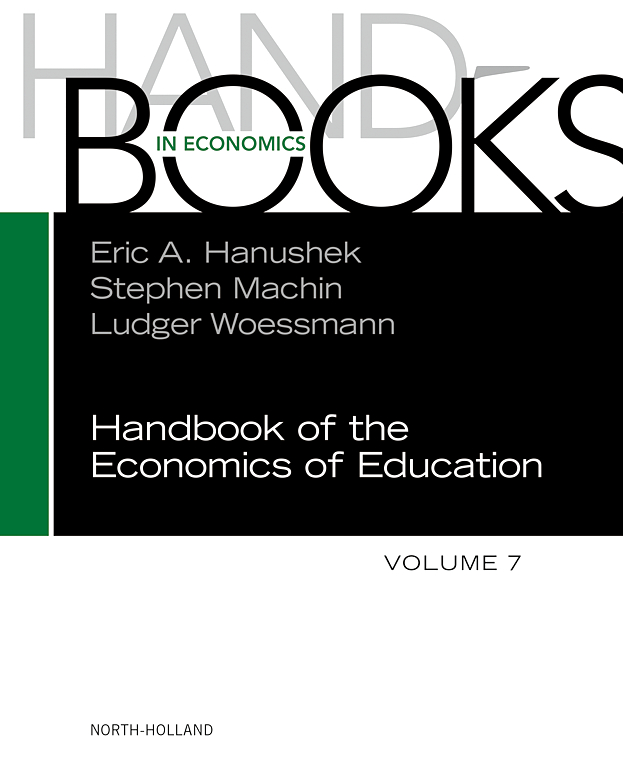
Dynarski, S., Page, L. C., & Scott-Clayton, J. (2023). College costs, financial aid, and student decisions. In E. A. Hanushek, S. Machin, & L. Woessmann (Eds.), Handbook of the economics of education (Vol. 7, pp. 227–285). Elsevier. https://doi.org/10.1016/bs.hesedu.2023.03.006

Share

◆
Publication Type

Subtraction by addition: Do private scholarship awards lead to financial aid displacement?

2024

Award displacement occurs when one type of financial aid award directly contributes to the change in the quantity of another award. We explore whether postsecondary institutions displaced awards in response to the Pittsburgh Promise scholarship by capitalizing on the doubling of the maximum Promise amount in 2012. We use de-identified student-level data on each Promise recipient's actual cost of attendance, grants, and scholarships, as well as demographic and academic characteristics from school district administrative files to examine whether and how components of students’ financial aid packages and total costs of attendance changed after the Promise award increase. To account for overall trends in pricing and financial aid, we compare Promise recipients to the average first-time, full-time freshman entering the same institutions in the same year as reported by the Integrated Postsecondary Education Data System (IPEDS). With these two data sources, we assess differences in costs and awards between Promise students and their peers, on average, and examine whether and in what ways these differences changed after the increase in Promise funding. We refer to this strategy as a “quasi-difference-in-differences” design. We do not find evidence that institutions are responding to the Promise increase through aid reductions.

Suggested Citation:

Suggested citation

Lowry, D., Page, L. C., Nurshatayeva, A., & Iriti, J. (2024). Subtraction by addition: Do private scholarship awards lead to financial aid displacement? Economics of Education Review, 99, 102517. https://doi.org/10.1016/j.econedurev.2024.102517

Share

◆
Publication Type

Assessing Atlanta’s Placed-Based College Scholarship

2024

We investigate whether and how Achieve Atlanta’s college scholarship and associated services impact college enrollment, persistence, and graduation among Atlanta Public School graduates experiencing low household income. Qualifying for the scholarship of up to $5,000 per year does not meaningfully change college enrollment among those near the high school GPA eligibility thresholds. However, scholarship receipt does have large and statistically significant effects on early college persistence (i.e., 14%) that continue through BA degree completion within 4 years (22%), although scholarship receipt does not impact graduation from 2-year colleges. We discuss how the selection criteria and processes of place-based programs intended for those from economically disadvantaged backgrounds may influence results for different types of students.

Suggested Citation:

Suggested citation

Bueno, C., Page, L. C., & Smith, J. (2024). Assessing Atlanta's placed-based college scholarship. AERA Open, 10. https://doi.org/10.1177/23328584241287459

Share

◆
Publication Type

Are Artificially Intelligent Conversational Chatbots Uniformly Effective in Reducing Summer Melt? Evidence from a Randomized Controlled Trial

2021

Our field experiment extends prior work on college matriculation by testing the extent to which an artificially intelligent (AI) chatbot’s outreach and support to college students (N = 4442) reduced summer melt and improved first-year college enrollment at a 4-year university. Specifically, we investigate which students the intervention proves most effective for. We find that the AI chatbot increased overall success with navigating financial aid processes, such that student take up of educational loans increased by four percentage points. This financial aid effect was concentrated among would-be first-generation college goers, for whom loan acceptances increased by eight percentage points. In addition, the outreach increased first-generation students’ success with course registration and fall semester enrollment each by three percentage points. Our findings suggest that proactive chatbot outreach to students is likely to be most successful in reducing summer melt among those who may need the chatbot support the most.

Suggested Citation:

Suggested citation

Nurshatayeva, A., Page, L. C., White, C. C., & Gehlbach, H. (2021). Are artificially intelligent conversational chatbots uniformly effective in reducing summer melt? Evidence from a randomized controlled trial. Research in Higher Education, 62(3), 392–402. https://doi.org/10.1007/s11162-021-09633-z

Share