Annenberg Institute: R.I. Schools Face Numerous Challenges Post-Pandemic
 Annenberg Institute: R.I. Schools Face Numerous Challenges Post-Pandemic
" class="news_header_image_default" />


RI Students Missing School at Record-high Levels, Sometimes for Months
RI Students Missing School at Record-high Levels, Sometimes for Months
" class="news_header_image_default" />
Related news


Professor Matthew Kraft Appointed to White House Council of Economic Advisers
Professor Matthew Kraft Appointed to White House Council of Economic Advisers
" class="news_header_image_default" />
Related news


The Department of Education Welcomes Christopher Cleveland as Assistant Professor of Education and Education Policy
The Department of Education Welcomes Christopher Cleveland as Assistant Professor of Education and Education Policy
" class="news_header_image_default" />
Related news
-
External News
-
External News

-
External News


Student Upward Mobility Initiative: Annenberg Institute Grant Recipients
Student Upward Mobility Initiative: Annenberg Institute Grant Recipients
" class="news_header_image_default" />
The Annenberg Institute at Brown University is pleased to announce that faculty members Christopher Cleveland and Jesse Bruhn along with Institute Director John Papay have received prestigious research grants as part of the Student Upward Mobility Initiative. They will join 13 other research teams nationwide exploring how PK–12 education can enhance students' future economic mobility.
Christopher Cleveland is a co-investigator on a project titled "What Skills Help Students with Disabilities Thrive?" along with colleagues Jacob Hibel, Andrew Penner, and Andrew Saultz. This research will investigate how the services and supports provided to students with disabilities during their K–12 education relate to their academic and life outcomes in early adulthood, including postsecondary attainment, income, and more. Using linked data from Oregon and the U.S. Census Bureau, the study will evaluate how outcomes vary depending on the services students received and their duration.“Students with disabilities face challenges around key markers of being on a trajectory of adult flourishing,” Cleveland notes. “This research project will highlight promising policy and practice levers that have the potential to enhance the skills and competencies tied to later economic mobility among learners with diverse abilities.”
Jesse Bruhn will lead the project "Using Machine Learning to Uncover Which Skills Contribute to Students' Future Economic Mobility." The team will apply machine learning techniques to analyze test questions and capture specific skills that contribute to long-term outcomes such as wages and college attendance. Using math and reading test data from Texas public schools, this research aims to uncover critical skills that may be overlooked in current standardized tests but are vital for economic mobility. “Our goal with this project is simple,” Bruhn explains, “to improve standardized testing so that it provides teachers and families with more accurate insights into the skills and abilities that truly matter for long-term success and well-being.”
John Papay received a grant for his project titled "How Does Academic Success in High School Translate into Economic Mobility?" In this study, Papay and collaborators with Annenberg’s Educational Opportunity in Massachusetts project will examine how students' grades, test scores, and other academic success indicators in high school relate to postsecondary achievement and earnings. The research, growing out of a partnership with the Massachusetts Departments of Elementary and Secondary Education and Higher Education, will focus on how schools can improve K–12 outcomes and economic mobility for students from historically marginalized groups. “We are excited to be engaging in this work with educators in Massachusetts,” remarks Papay, “and to collaborate with other researchers in the SUMI community to understand educational opportunity and mobility across the country.”
These grants are made possible by the support of the Student Upward Mobility Initiative, a sponsored project of Rockefeller Philanthropy Advisors in partnership with the Urban Institute, with funding from the Walton Family Foundation, Bill & Melinda Gates Foundation, and Joyce Foundation.
The mission of the Student Upward Mobility Initiative is to support students’ economic mobility by establishing a set of skills and competencies in PK–12 education—across academic achievement, noncognitive factors, health and well-being, social capital, and career preparation—that educators and policymakers can use to shape practices, programs, interventions, and broader systems change.
To learn more about the initiative, visit student upward mobility.urban.org.
Related news


Annenberg Institute Launches the EdExchange: A Groundbreaking Hub for Education Research and Improvement
Annenberg Institute Launches the EdExchange: A Groundbreaking Hub for Education Research and Improvement
" class="news_header_image_default" />
Turning rigorous research into real improvements for students and schools.
[Providence, RI] — The Annenberg Institute at Brown University proudly announces the launch of the EdExchange, a comprehensive platform uniting three of Annenberg’s key initiatives: EdWorkingPapers, EdInstruments, and EdResearch For Action. Visitors to the websites can find free online resources on topics that matter to them, written for their needs, whether they are researchers, educators, or policymakers.
The EdExchange tackles a persistent issue in education: the lack of timely, accessible, and actionable research insights. As schools face mounting pressure to implement proven strategies, the EdExchange provides a streamlined solution, making high-quality research more practical and readily available.
"The current way we create and share research just isn't working for the people who need it most," says Nate Schwartz, Director of Applied Research at the Annenberg Institute. "With the EdExchange, we are building a collaborative environment where researchers, policymakers, and practitioners can work together to better define needs, generate evidence, and make meaning across a common body of knowledge."
A Unified Resource for Education
The EdExchange integrates three complementary tools:
- EdWorkingPapers is a repository of working papers that enables the prompt and open dissemination of high-quality studies across various topics, strengthening connections within the research community and empowering policymakers with essential evidence.
- EdInstruments is an online library of measurement tools and guidance resources designed to support data collection in schools and districts and elevate the quality of data-driven improvement efforts.
- EdResearch For Action is a collection of clear, easy-to-digest summaries of the state of research in specific topic areas, enabling education leaders to make critical decisions based on a body of evidence. This project is run in partnership with Results for America.
“By combining these three resources within the EdExchange, we’re working to create a more integrated landscape to use education research,” says John Papay, Director of the Annenberg Institute. “We want to ensure that research findings are accessible, relevant, and actionable.”
Transforming the Education Research Landscape
The launch of the EdExchange comes at a critical time, as schools and districts face increasing demands to implement strategies proven to support students and improve outcomes. However, many education systems still struggle to access actionable research in a timely manner. The EdExchange centralizes resources, fosters collaboration, and simplifies access to evidence-based strategies, making it easier for schools to achieve meaningful improvements.
“We hope to become the first stop for practical and rigorous evidence on what we know about building thriving schools,” says Schwartz.
Designed as a “town square” for the exchange of ideas and resources, the EdExchange offers a user-friendly interface that allows seamless navigation across its projects. This unified approach strengthens the connection between research and practice, driving real improvements for students and schools.
For more information, visit: annenberg.brown.edu/edexchange.
Related news
-
External News

-
External News

-
External News



Question 2: A misguided effort that will harm kids, their futures, and the economy
Question 2: A misguided effort that will harm kids, their futures, and the economy
" class="news_header_image_default" />
Related news
-
External News

-
External News
-
External News



Introducing the Rhode Island Professional Learning Network
Introducing the Rhode Island Professional Learning Network
" class="news_header_image_default" />
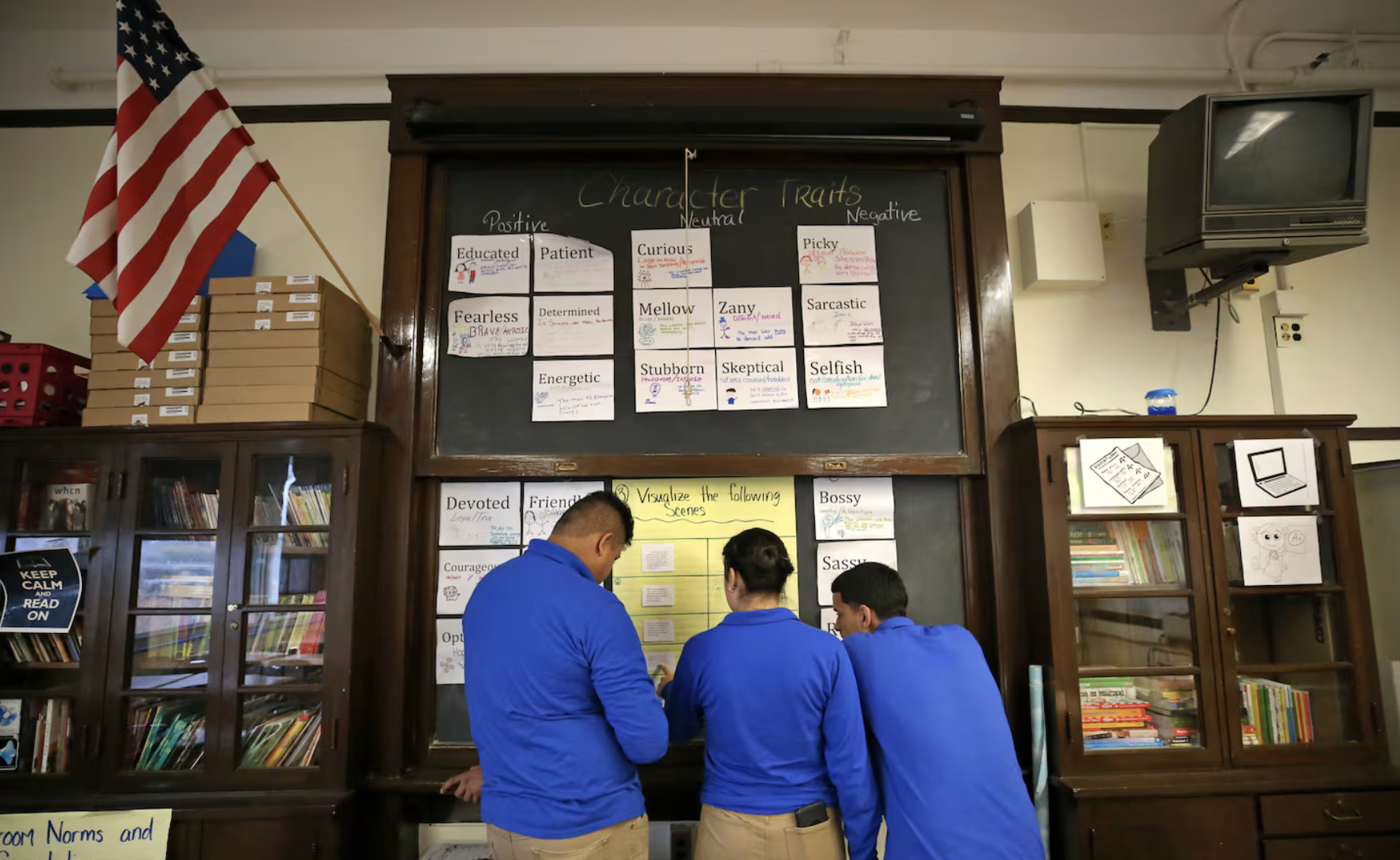
The Rhode Island Professional Learning Network is a long-term collaboration that starts with planning evidence-based PL initiatives that are responsive to member districts' priorities and incorporate implementation, data collection, and connected learning in order to achieve the following goals:
- Improvement in schools
- Learning for educators
- Useful insights for others
The PL Network is a partnership between the Rhode Island School Superintendents Association and the Annenberg Institute and includes members from Bristol-Warren, Central Falls, Narragansett, Providence, Woonsocket, and Paul Cuffee charter school. Please contact Brenda Santos if you are interested in learning more about Annenberg’s work with Rhode Island schools.
Narragansett School System Hosts the First Deep Dive
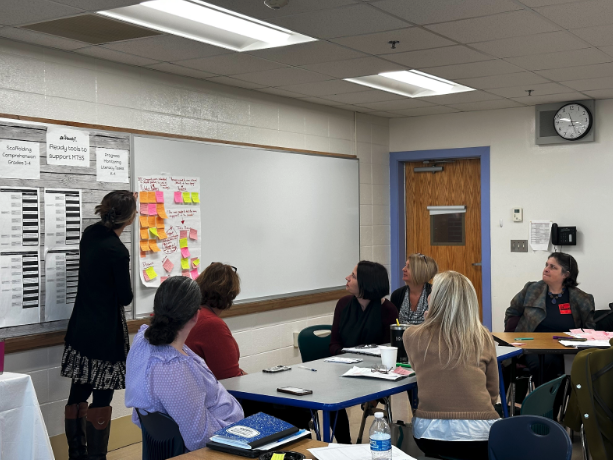
On Wednesday, November 13, 2024, Narragansett School System hosted the first of five Professional Learning (PL) Network Deep Dives at Narragansett Elementary School. During Deep Dives, PL network members spend half of a school day learning together, by focusing on one district’s initiative, observing instruction and teacher PD, and offering their expertise as critical consultants to each other. Thank you to network members Gail Dandurand and Pete Cummings, NES principal Lisa Wilson, and the entire team in Narragansett for welcoming us!
What We Learned
- For Narragansett coaches, leading change started with making change in their own classrooms. As their work continued, classroom implementation remained the key to bringing more teachers on board.
- Coaches Linda McQuaide, Jen Loiselle, and Vanessa Miller adopted Building Thinking Classrooms (BTC) in their own teaching (Linda in middle school math, Jen in high school reading intervention, and Vanessa in high school digital literacy) so that they could bring teachers first hand experience with implementation.
- Narragansett leaders eagerly encouraged early adoption. When teachers expressed interest, they piled on the support. And then they took every opportunity to shine a light on changing practice, changing attitudes, positive student feedback, and academic results!
- To help every teacher get on board, leaders looked for ways to make BTC adoption accessible, like encouraging teachers to try it for short “non-curricular tasks.”
- For Narragansett, Common Planning Time (CPT) was a necessary condition for success. District leaders prioritized making sure every teacher has common planning time with their team.
- Coaches in Narragansett coach by team. As teachers support one another and see BTC working with students in their grade level or content area, momentum builds!
- Shifting teacher practice in NSS has meant putting HQCM and the district’s pedagogical vision for active and engaging classrooms “in sync.” During CPT, coaches support teachers as they plan to implement curriculum using BTC strategies for developing student thinking and ownership over their learning.
Practical Measures in Action
Narragansett High School teachers implementing BTC created a rubric for their students to reflect on their engagement in collaborative learning. The elementary team then iterated on the tool (below), which we saw in action in NES classrooms!
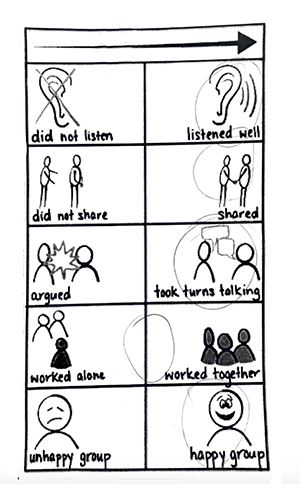
In classroom observations, we saw how supports for collaborative learning like this tool above help students develop the social learning skills they will need in school and life, the cognitive skills of independent learners (as they work together to define problems and design approaches to solving them), and the reasoning skills of mathematicians.
What Leaders Are Saying
Deep Dive participants returned to their districts across the state with concrete resources and next steps for their own PL leadership.
“Narragansett provides a road map: we can begin with the book study invitation, follow up with job embedded coaching and team collaboration. Protocols for student collaboration are important to the system and so researching protocols with high-impact is an important step. Finally, supporting teachers with question sets that promote thinking is another important step/component to share, model, and investigate.”
“The more complex (more rigorous) the task, the higher the student engagement and mathematical discourse. I will bring this back to my district so that we may ensure that we are providing students with rigorous tasks that promote productive struggle that lends itself to more engagement and discourse from the students.”
The next PL Deep Dive will be happening in Woonsocket on December 11th. Please contact Brenda Santos (brenda_santos@brown.edu) if you are interested in learning more about Annenberg’s work with Rhode Island schools.
Related news


The PL Network Goes to Woonsocket for Their Second Deep Dive
The PL Network Goes to Woonsocket for Their Second Deep Dive
" class="news_header_image_default" />
The PL Network brings together six RI districts that are focused on improving classroom instruction and student outcomes through curriculum-based professional learning (CBPL) for evidence-based and data-driven collaboration with Annenberg’s RI Education Research team. On Wednesday, December 11, the PL Network visited Woonsocket Education Department’s two middle schools for a Deep Dive. Woonsocket Director of Curriculum and Development Dr. Angie Holt and Director of Multilingual Learners Rania Aghia led the group through a half-day of observations and discussion.
In the PL Network’s first Deep Dive in Narragansett, we gained some insight into the way districts are working to bring together HQCM and the district’s vision for instruction - putting them “in sync.” In both Narragansett and Woonsocket, this means helping teachers to implement HQCM consistently with the district’s strategy for active, student-centered learning. In Woonsocket, network members observed instruction in middle school Social Studies classrooms where teachers are piloting new high quality curriculum material (HQCM) and talked with district Innovation Specialists, the coaches, about the professional learning support they provide.
What we learned about CBPL in Woonsocket:
- Grounding in the standard helps teachers prepare to teach using HQCM that is new to them. Helping teachers to focus on the learning outcome–even when the standards are not explicitly linked in the curriculum–is a coaching move that Woonsocket Innovation Specialists use to keep teachers focused on what students will understand and be able to do.
- Student collaboration and discussion is high-impact when the task is challenging and requires students to grapple. Coaches can support active, student-centered learning by helping teachers to identify which parts of units and lessons in the curriculum are suited to their structures for student collaboration and discussion. For example, a unit launch that builds students’ background knowledge isn’t likely to be a high-impact moment for collaborative learning structures. Tasking students with discussion at that point could lead to procedural instruction and pacing challenges. But later in the same unit, when students are analyzing primary source documents, collaboration and discussion could deepen student learning, improve students’ communication skills, and increase student investment.
- Concrete tools and protocols for student collaboration and discussion remain key to effective student-centered instruction when teachers are implementing new HQCM. During the Deep Dive, visitors heard student and teacher testimonials about how “teaming” structures, including cards students can refer to for support in discussion, had facilitated more student voice, higher engagement, and more active learning. While implementing a new curriculum, coaches can support teachers to continue using these practices from the district’s model of instruction to support their efforts around student collaboration and discussion.
What Leaders Are Saying
Deep Dive participants returned to their districts across the state with concrete resources and next steps for their own PL leadership.
“Today’s findings will help me in my coaching of how to adapt a high quality curriculum for our model of instruction.”
“I am modeling in a classroom tomorrow. I am already thinking about more intentional moves to structure student collaboration and better facilitate the transfer of teacher moves from the model to practice.”
“Today’s learning will drive coaching decisions and strategies to support classroom teachers.”
“This was a reflective model that helps Woonsocket, but I see the same instructional needs and next steps to bring to our district.”
The next PL Deep Dive will be happening in Bristol-Warren on January 15th. Please contact Brenda Santos (brenda_santos@brown.edu) if you are interested in learning more about Annenberg’s work with Rhode Island schools.
Related news
-
External News

-
External News

-
Feature



PL Network Deep Dives Continue in Bristol-Warren
PL Network Deep Dives Continue in Bristol-Warren
" class="news_header_image_default" />
On Wednesday, February 5, the PL Network had its third Deep Dive at Mount Hope High School (MHHS) in the Bristol-Warren Regional School District (BWRSD). MHHS Associate Principal Wayne Lima led the group, along with BWRSD PL network members Assistant Superintendent Diane Sanna, Literacy Coordinator Mary Cabral, and Math Coordinator Chris Slater. At MHHS, the group continued on the same themes explored in previous deep dives in Narragansett and Woonsocket, focusing on curriculum implementation and instructional practice through discussion with leaders and observations of 9th and 10th grade math classrooms. The district’s overarching PL strategy is to “use curriculum to advance the instructional vision.”
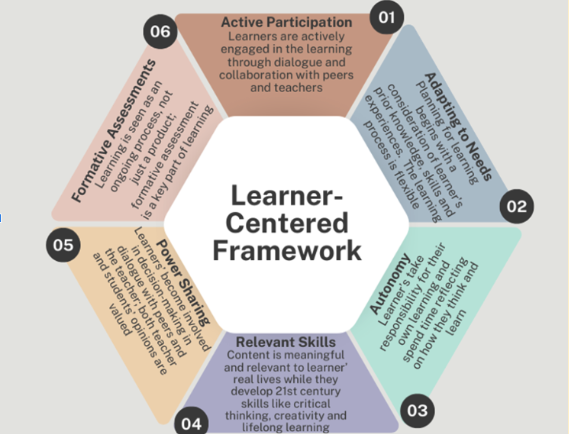
To start the day, Wayne Lima oriented visitors to the vision for instruction, the Learner-Centered Framework, and instructional leaders’ strategy for supporting teacher learning at MHHS. Following classroom observations, using a tool aligned to the Framework, visitors shared evidence from classrooms, discussed the progress the school is making toward its PL goals, and suggested potential next steps for PL leaders.
PL Network members who joined the Deep Dive also continued to develop their own individual learning and the group’s collective understanding of PL trends in the state. They noted ongoing topics of discussion in PL network conversations: the goal and the challenge of instruction that centers student thinking and conceptual understanding; and the importance of fostering a positive culture of adult learning. These threads illustrate the common experiences and the collective opportunities for instructional improvement through CBPL in RI.
What we learned about CBPL in Bristol-Warren:
- CBPL changes practice at both the individual teacher and the team level. PL leaders in Bristol-Warren attend to both processes with aligned but differentiated strategies.
- Department chairs lead weekly hour-long meetings with each teacher team during common planning time (CPT). The Associate Principal provides an agenda structure that department chairs use to guide teachers’ planning of how they will implement prioritized components of the Learner-Centered Framework in their teaching with the curriculum. As in Narragansett, CPT is a key precondition of BW’s PL strategy.
- Regular walk-throughs provide data that inform the PL leadership of both school administrators and department chairs. Department chairs are the owners of the walk-through data tools, ensuring that they have agency to lead instructional change with teachers in their departments. When individual teachers need support, department chairs, colleagues that teachers feel comfortable with, provide it.
- MHHS’s strategy for distributed leadership aims to build the capacity of department chairs as one way to align instruction to the vision. Through the rounds, the calibration process helps to develop department chairs. Recently, teachers started to join rounds to increase their impact.
- Using a focused and sequential approach to instructional change can lead to more buy-in from teachers. MHHS leaders took teachers’ lead on where to start the instructional change process by asking them to try making small changes to – or “tweaking” – their instruction to align it with components of the Learner-Centered Framework. Then they focused the school on the two components that the teachers reported most confidence with: active participation and formative assessment. After some time, they shifted to focusing on active participation and adapting to needs. Leaders also used PD time to help teachers connect the Learner-Centered Framework (and the instructional rounds tool aligned to it) with previous frameworks for understanding effective curriculum implementation.
- Instructional rounds can drive instructional improvement, but teachers are more open to observation when visitors use common tools to look at consistent areas of instruction. Wayne assured teachers that all observers would use the observation tool aligned to the Learner-Centered Framework, the instructional vision the teachers had invested in.
- Even after significant structural investment in PL (scheduling CPT for all teachers), districts continue to share common barriers to implementing their PL strategies: finding coverage for teachers to participate, and union restrictions on classroom visits.
The PL Network has three more Deep Dives coming up this spring. Please contact Brenda Santos (brenda_santos@brown.edu) if you are interested in learning more about Annenberg’s work with Rhode Island schools.
Related news
-
External News
-
External News

-
Short Features