

The Project
Educational Opportunity in Massachusetts is a research-practice partnership between researchers at the Annenberg Institute at Brown and the Massachusetts Departments of Elementary and Secondary Education (DESE) and Higher Education (DHE). The partnership was formed in 2019 as a result of the state’s appetite for actionable research and data-informed policy.
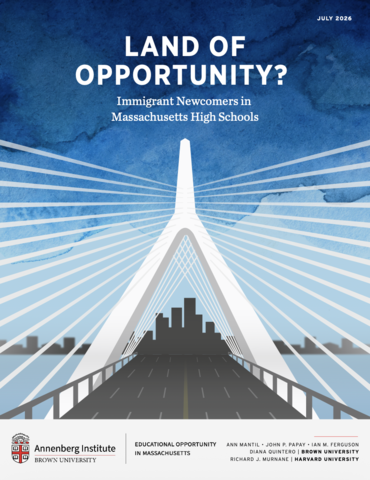
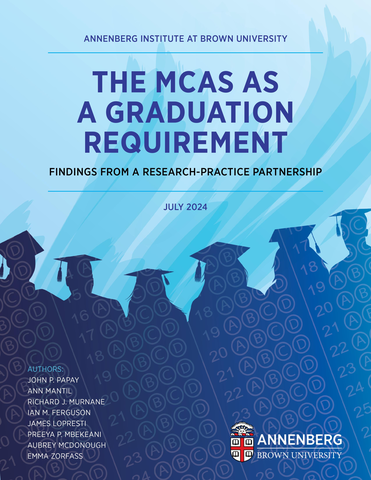
We study student pathways from the K-12 system into the state’s higher education system and into the labor force.We are interested in the impacts of schools and educational policies on this progress, particularly related to students from historically marginalized backgrounds. Our work has been used to inform decision-making and debate in key policy areas, including the Massachusetts Comprehensive Assessment System (MCAS) testing as a graduation requirement, high-school course-taking and the MassCore curriculum, community college transfer pathways, and how well schools serve understudied populations such as students classified as English leaners, including newcomers.
The Data
In partnership with the Massachusetts Department of Elementary and Secondary Education, we leverage longitudinal, student-level PK-12 data from 2002 to the present. We link this information to data about students’ college enrollment and graduation via the Massachusetts Department of Higher Education and the National Student Clearinghouse, as well as to earnings data from the Massachusetts Unemployment Insurance system. Our data affords us the opportunity to follow students through all potential milestones in their educational careers. Additionally, the richness of our PK-12 data allows us to conduct nuanced analyses that take into account many aspects of students’ elementary and secondary educational experiences, including standardized test scores, attendance and suspension rates, high-school coursework and GPA, and the demographic profiles of the schools they attend.
News


