A proposed four-phase framework for building medical education pathway programs through partnerships among medical schools, hospitals, and local high schools, applied to the Clinical Mentorship Program in Woonsocket.
This report shares lessons and challenges from eight large urban districts that set out to build systems that successfully prepare and support equity-centered school principals.
An Annenberg study of Massachusetts' science testing graduation requirement, finding that performance improved across subgroups even as failure rates grew more unequal — with English learners heavily overrepresented among those who never passed.
Lewis and Diamond's study of a well-resourced, integrated high school, showing how racial disparities persist through discipline, tracking, and opportunity hoarding — with new chapters revisiting the school and on what to do.
A synthesis of more than 15 years of Annenberg research on educational opportunity and state testing in Massachusetts, offered as evidence for the debate over the MCAS graduation requirement.
A regression-discontinuity study finding that the performance label attached to a state test score — not just the score itself — has lasting effects on whether urban, low-income students go to college.
A regression-discontinuity study examining how failing one or both Massachusetts exit exams affects teenagers' decisions about staying in school — extending the method to handle two tests at once.
A regression-discontinuity study finding that barely failing the Massachusetts math exit exam reduced graduation rates for low-performing urban students, while having no such effect on their suburban peers.
An examination of how MCAS performance relates to college completion and later earnings, and how racial and socioeconomic gaps persist even among students with similar academic achievement.
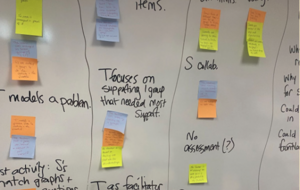
The PL Network's third Deep Dive at Mount Hope High School in Bristol-Warren, focused on how department chairs and instructional rounds drive curriculum implementation in 9th and 10th grade math.
This Stateline piece, published by the New Jersey Monitor, tracks the national decline of high school exit exams after Massachusetts voters repealed the MCAS requirement, with Brown's John Papay on what drove the shift.
This article examines the debate over raising Massachusetts’ MCAS graduation requirements and highlights research from Annenberg Institute on how MCAS performance relates to students’ long-term college and career outcomes.
A screening of Counted Out, a documentary on math literacy as a source of social and economic power, hosted with RIDE and RISSA. Wednesday, November 4, 4 p.m., Cranston West High School.
The Boston Globe covers "The MCAS as a Graduation Requirement," an Annenberg report drawing on more than 15 years of research to inform Massachusetts' November ballot question — with evidence for both sides.
The PL Network's second Deep Dive, hosted by Woonsocket, where members observed middle school social studies classrooms piloting new curriculum and talked with coaches about supporting teachers through the shift.
Stateline tracks the national decline of high school exit exams after Massachusetts voters repealed the MCAS graduation requirement, with Brown's John Papay on what drove the shift and what the tests still predict.
A look at Massachusetts’ proposed new high school graduation requirements, including state assessments, MassCore coursework, capstone projects, and opportunities to develop financial, digital, and career-readiness skills.
This talk will examine the relationship between content relatability and racial gaps in standardized test performance, exploring how assessment design and student experiences shape educational outcomes.
WBUR's voter explainer on Ballot Question 2 draws on Annenberg's MCAS research, citing findings on who fails the exam and how scores predict long-term outcomes.
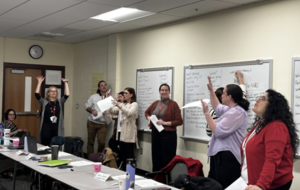
Annenberg and the Rhode Island School Superintendents Association launch a professional learning network across six districts, with the first Deep Dive hosted by Narragansett on classroom implementation and coaching.
Join us for a provocative conversation with Dr. Mica Pollock, who will share findings from two of professor John Diamond’s major studies on these issues.