Uses Panel Study of Income Dynamics data to show that parent-to-adult-child financial transfers for education have grown and become more dependent on parental wealth.
Shows how undocumented Latino youth in Nashville depend on private merit-based aid for college access, and how that inclusion undermines their sense of public belonging.
During the US Industrial Revolution, educational expansion may have created skilled jobs through innovation and skill upgrading or reduced skilled jobs by mechanizing production. Such arguments contradict classic sociological work that treats education as a sorting mechanism, allocating individuals to fixed occupations.
Investigates whether campus religious group participation mediates the link between high school religious attendance and college grades, especially for Black and Hispanic students.
This talk will examine how college admissions policies affect Asian American applicants, exploring questions of equity, access, and the ways admissions practices shape opportunities in higher education.
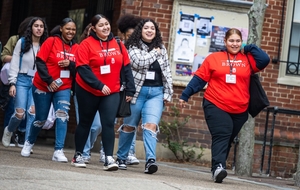
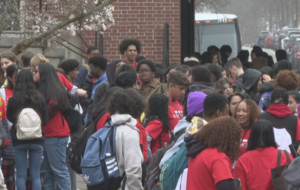
Brown News covers College Day, an Annenberg-organized event bringing nearly 350 high schoolers from Providence, Central Falls, and Pawtucket to campus to explore their post-secondary options.
An Annenberg report tracing how Massachusetts' SUCCESS student support initiative moved from budget allocation to practice across 15 community colleges, drawing on interviews with state leaders, administrators, and program staff.
A Boston Globe editorial on why too few Massachusetts community college students transfer to four-year schools, and what dual admissions and clearer transfer pathways could change.
Jordan Kostiuk and Jesse Morin will discuss research on educational inequality, exploring factors that shape unequal educational experiences and outcomes through an empirical education policy lens.